
Memories of Ghana
This post has an accompanying gallery: Memories of Ghana. I had great fun pulling this one together.
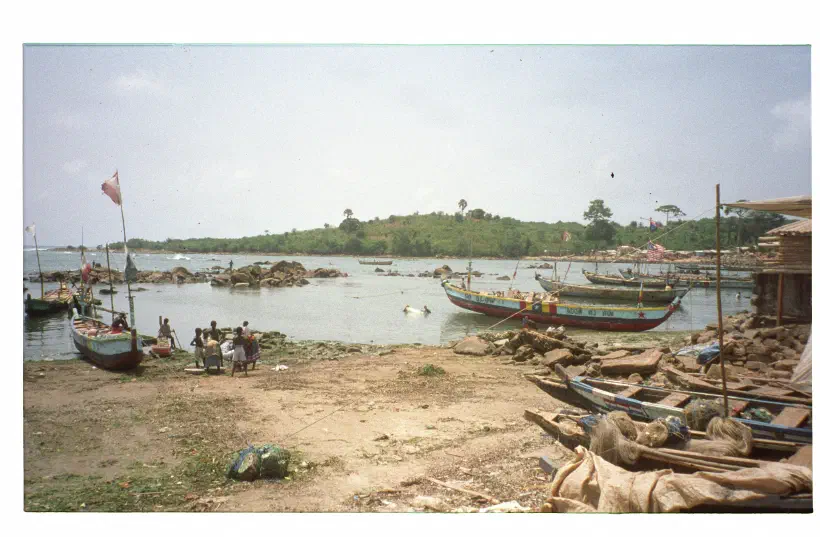
I visited Ghana in 2001. I travelled without a phone, laptop, or a paper notebook. I have no email confirmation of my flight booking, no correspondence I sent at the time, no written record of my travels. The one thing I did have was a camera.
In talking about the trip with a friend from Ghana I was surprised to find that I could no longer remember the name of the small town where I lived for much of the trip. After many hours trying to reconcile Google Street View images with the fallible certainty that I had in the accuracy of my own memories, I have the answer; Abra. Or at least I think that’s where I stayed.
This exercise brought back many memories, many of the jumbled up, confused, and imperfect. I wanted to write them down.
What follows is not a chronological account of the trip. It isn’t a review or a recommendation. It is my attempt to recount the memories in the order they occurred to me when thinking back to the time I spent in Ghana. Inaccuracies are guaranteed, memories are flawed. I’ve done my best to tell them without exaggeration or embellishment.
The Omelette
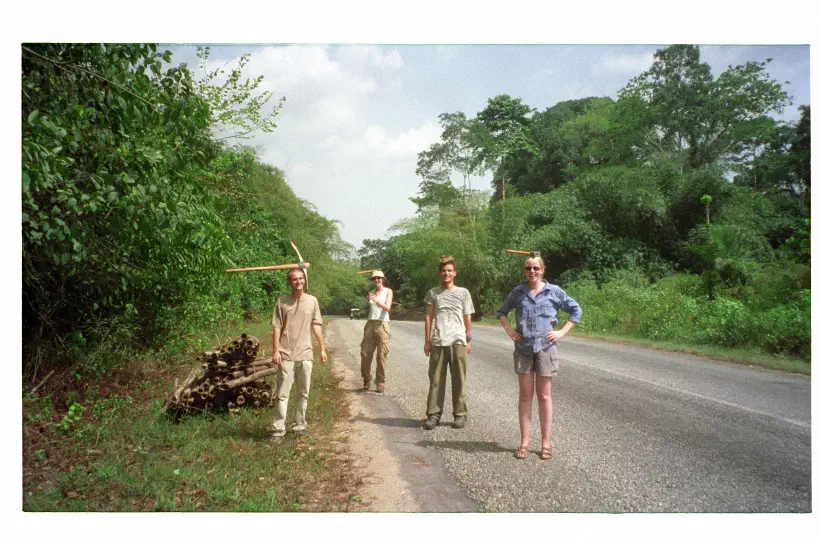
Coming back into town along the main Cape Coast Road the final stretch was always a hive of activity. Makeshift wooden stalls were set-up along each side of the road. Many were wooden carts, held in place with rocks. Others were more permanent, a wooden table with a small sloped roof held up on two central posts. During the day, the majority would be covered in an array of fruit, sugar cane, or water bags. Blue bags for those with a stomach less acclimatised to the local bacteria, plain unmarked ones for the brave. Others sold an incredible variety of sun dried fish, waving them around on sticks in part to attract custom, in part to keep the flies away.
At night, the stalls transformed. Dim bulbs hooked in to the nearest set of overhead cables with poorly insulated crocodile clips provided a warm glow over the stalls. From each, smoke rising into the night sky, carrying with it the warmth and aroma of toasted spices. Like the flies drawn to the bulbs, a crowd gathered around the stalls unable to avoid the draw of the feast they promised.
My favourite was the stall run by her mother and daughter. The left hand edge of the table was stacked high with loaves of bread. On the right, a mountain of eggs. Onions, peppers, and spices appeared from somewhere and, moments after placing an order, I was holding a load of bread, sliced open along its length and a hearty omelette stuffed inside. I was lost to the world.
In the years since I have tried to recreate this omelette on many occasions. I have never succeeded. The bread isn’t the same, the flavours in the omelette don’t even come close. I wish I’d paid more attention, or even asked for the secret.
The Haircut
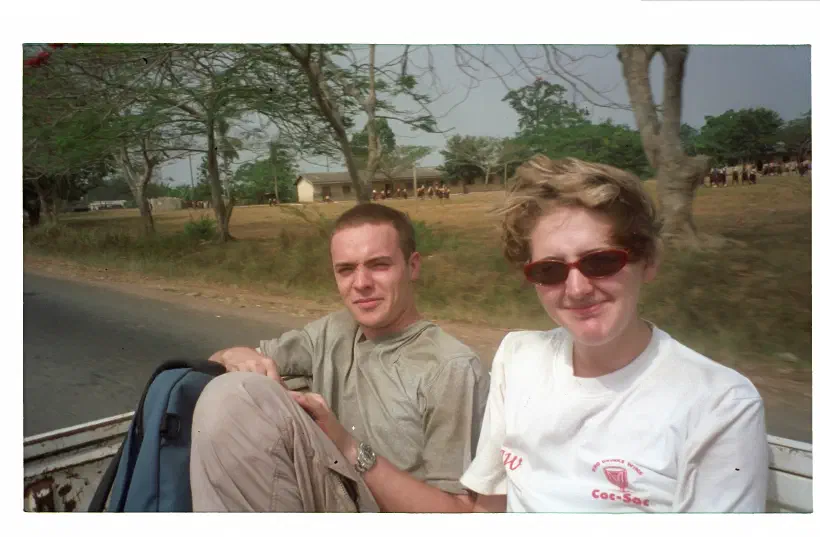
One weekend in Accra I ventured down to the end of the road where there was a small barbers stall. There was no sitting inside, no waiting room. I stood by the side of the road and had my first, and last, haircut in Africa. There were no questions. It was haircut or not. Off came the hair.
Hyper Local Weather
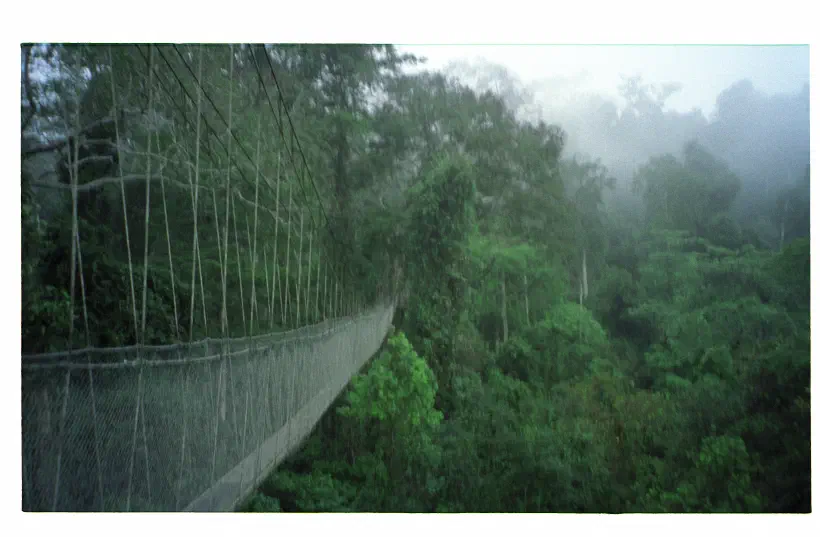
It always amazed me that you could be travelling on the bed of a truck in scorching 40ºC heat, the dust from the dry road creating a cloud behind you and yet cars coming the other way were soaked. Where windscreen wipers worked, they were hadn’t yet been switched off. Look up and you’d see a small column of rain pouring down on a small patch or road. I’d seen rain in the distance before but this was close and constrained enough that it felt like you could put your arms around the rain shower.
Getting drenched was inevitable. But there was no point reaching for a jacket or finding cover. By the time you’d shielded yourself you were back out the other side an in the sunshine again. Moments later you’d be dry again. These hyper-local rain showers were incredible to witness. Weather everywhere else I’ve been is always far more spread out. There is a gradient between raining and not raining. In Ghana you could step into the rain, and then step out again as decisively as you approach your routine shower.
Elmina Castle and Slavery
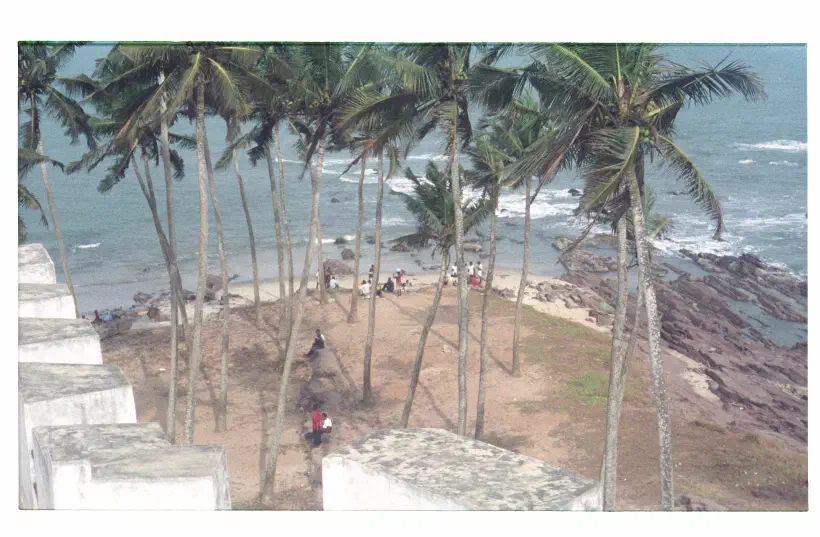
As we wandered around the battlements of Elmina castle, our host spoke to us about the slave trade. Up until that moment, slavery for me had been words in a history book. Hearing it described by someone who’s family had been personally impacted was a pivotal moment. The castle played a significant role in the Atlantic slave trade. One visitor website describes confronting this during a visit to the castle as, “A Complex and Uncomfortable Truth”. The feeling of discomfort was genuine and I can remember it forcing me to engage, and to listen, in a way that I’d never had to. But the lasting memory for me was how the whole conversation as we’d wandered around the castle was educational, informative, emotional. It was devoid of accusation and blame. Striking that balance is hard, and our host managed what he set out to do. We weren’t visiting a tourist destination, we were going to explore uncomfortable truths.
Work without Tools
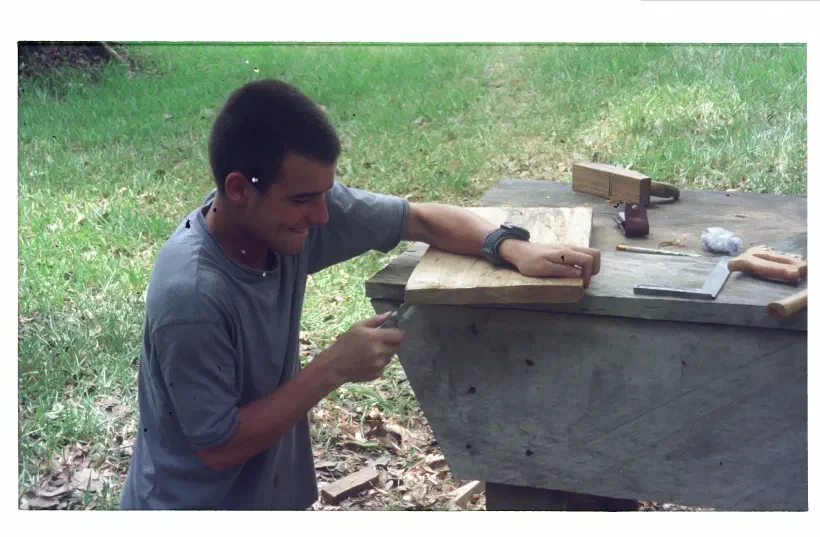
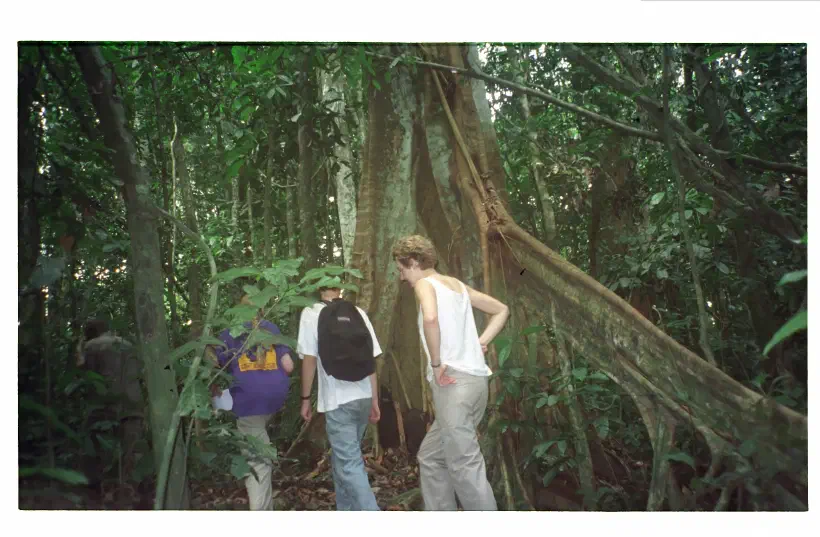
When I chose to visit Ghana I knew that I’d be signing up to work in the Kakum National Park, a rainforest region north of Cape-Coast. I didn’t know what work I’d be doing and have no recollection of any guidance about how to prepare. I’m certain that there was no instruction to pack common tools from a hardware store. We showed up at the visitor centre with a packed lunch and bags of water and were given instructions; Build and promote a new nature trail, highlighting the rich diversity of trees in the rainforest. When that was done we’d move on to repair work on the canopy walkway.
I’m not sure any of us had built a trail through the rainforest before. It began with a walk along the supposed path the trail would take. There was overgrown vegetation, a bridge in need of repair, a need for benches, signage, and information. One problem, we had no tools.
I remember walking the trail, trying to pull back vegetation by hand, marking the route by dragging a foot along the leaves. In parts it was obvious where to go, in other parts there was no clear path.
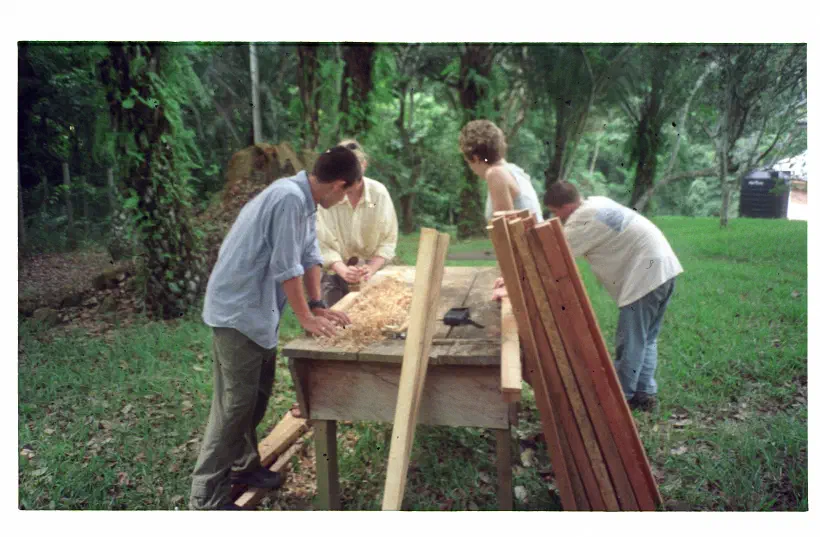
I don’t remember where we sourced wood for the signage, but I do remember visiting a hardware store in Abra in search of tools. We didn’t find a traditional store but there was a builder’s yard and we managed to pick up a couple of tools. We grabbed a plane (but not a way to sharpen it), a hammer, but no saw. At one point we discovered a pickaxe along the way. To describe our efforts to make signs as inefficient would be an understatement. Cutting through wooden boards with a pocketknife took forever. A blunt plane takes significant energy to push across a wooden surface. And using a scythe to sharpen the ends of stakes was less than ideal. But we had fun. We ended up with signposts for every significant tree, a couple of benches, and borders for the trail. I have vague memories of finding an internet cafe and producing a brochure for the trail in Microsoft Word.
Thinking back on it, I don’t know why we didn’t invest more time in procuring or maintaining the right tools. Budgets were tight for us all, but I like to think that faced with the same task today I’d work on the tooling ahead of jumping in to the task.
The Heat
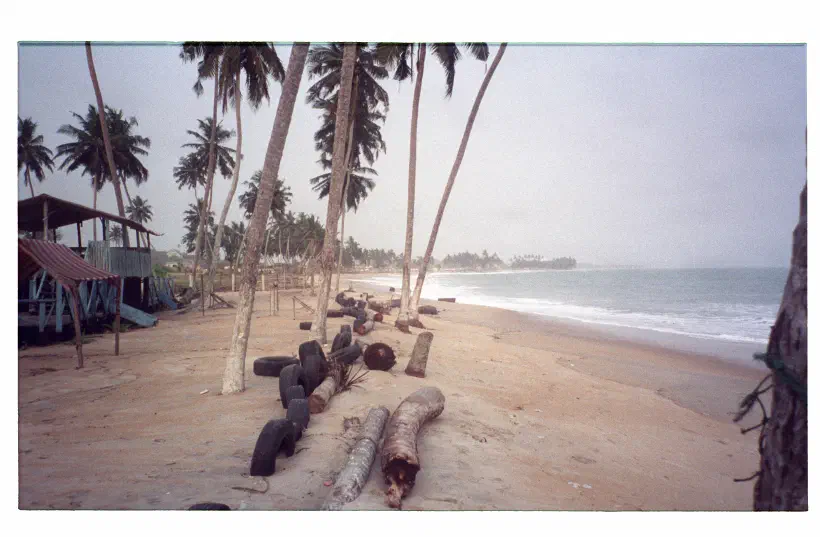
There isn’t much to say on this one, but other than a short trip to Greece in my teens, this was my first introduction to what could legitimately be called a hot climate. I survived for much of the trip but have vivid memories of discomfort in Mole National Park when my back felt painful. One look in the mirror and I decided to hide in the dark and shade. The entire surface of my back had erupted in large blisters. Thankfully these subsided overnight but I’d discovered my limit for heat.
The Bus Incident
Content warning: implied injury and possible death
Towards the end of my trip I took a couple of weeks to travel around Ghana. I hadn’t planned this in advance and was somewhat surprised at the extensive travel plans that others had made. Having spent much of the trip along the south coast, I jumped on a bus and headed North. With nothing more than a vague plan to loop the country, this was the first time I’d travelled alone with no goal or destination in mind. I was going to make it up as I went.
The journey North took a couple of days with severe minibuses, more than one extensive period by the side of the road as wheels were changed, breaks repaired, and engines cooled. For the return trip south, I decided to take the coach instead and do the trip in one overnight leg.
I dosed off on the journey. It was pitch black outside and no lighting meant there was nothing to see other than the occasional lights (or not) of a passing vehicle. I was woken suddenly, pressed hard against my seat belt as the drive stood on the breaks. There was a scream. There was a thud. Gasps turned into murmurs. None of them were in English. The bus carried on for a number of minutes eventually pulling in to a lay-by. Everyone started to get off, luggage was unpacked and left at the side of the road. No one said anything. Eventually someone came over to me and said what they thought had happened. The dent in the windscreen of the bus said it all.
A small group went back up the road. The bus driver vanished. We waited. At this point my memory starts to fade. A family offered me a lift, I accepted and ended up in their home not far from Accra. I don’t remember sleeping.
The Power of Religion
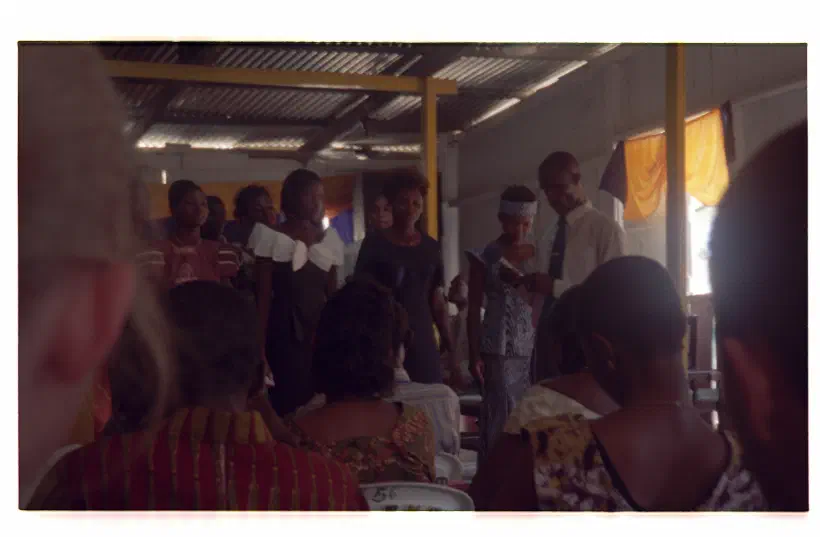
I’m no stranger to religion but I’ve always associated it with solemnity and seriousness. In Ghana it was the opposite. Religion was something to be celebrated with energy, joy, dance and song. There were many times when we were encouraged to attend and even participate. These events weren’t an hour on a Sunday morning. They were half-day events. Friends who had strong religious views found it challenging at times.
Hospitality and Friendship
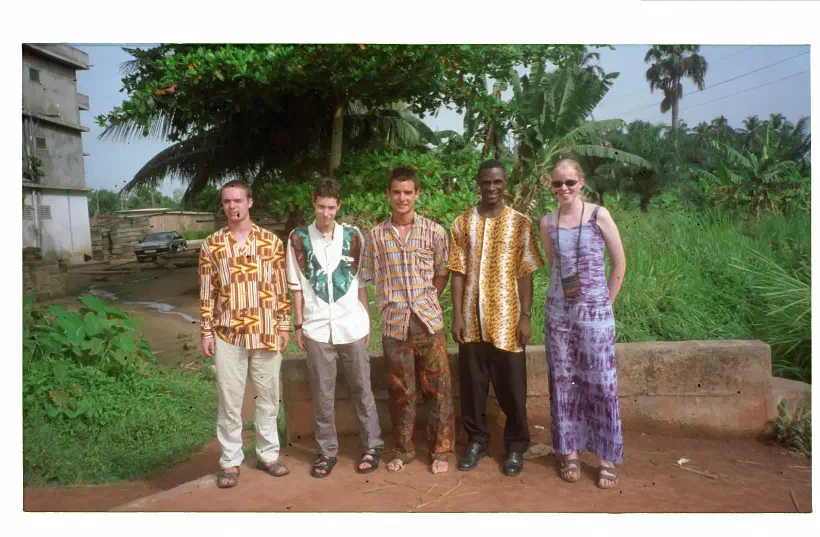
I felt nothing but hospitality and warmth during the trip. Meeting someone who had been to London and then painstakingly trying to put place names to their trip by listening to them describe how they navigated around. As someone who couldn’t tell you the names of roads a block away from home, I’ve always navigated by either guessing or through visual recognition. I find it easy to translate the features on a map to my surroundings. It was great fun to find someone who remembers routes in the same way.
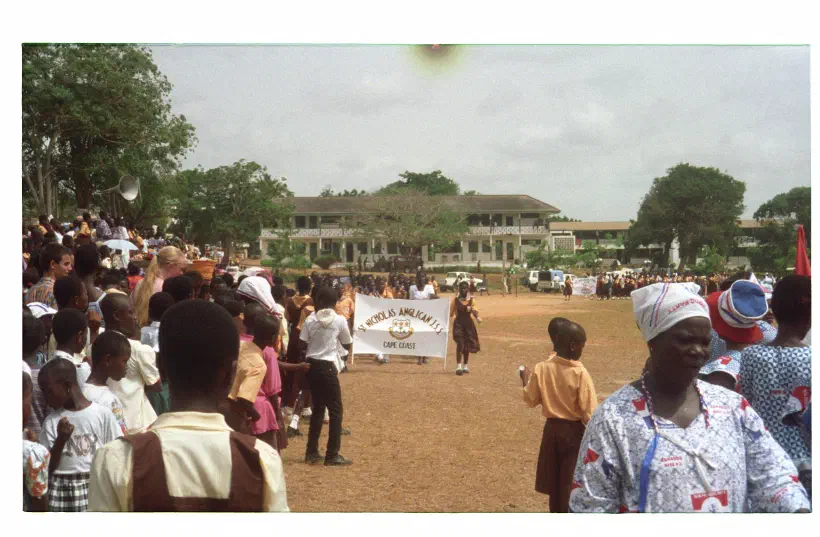
There was the time I found myself comparing music with a local boy who was fascinated by my minidisc player. After listening through many of the discs, we tried recording a few of his favourite tracks onto a blank disc that I had. This involved a trip to the local market, and twisting two cables together for a makeshift 3.5mm m-m audio cable.
There was my host, who persuasively encouraged us to try things that were out of our comfort zone, the food, the visits to see where he worked. He was never overbearing, always curious and always encouraging.
My Own Awkward Naivety
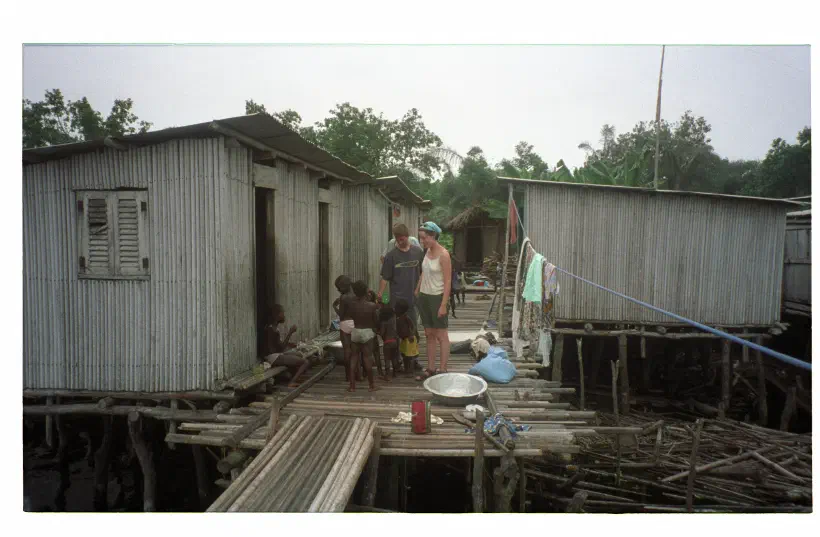
I loved my time in Ghana, I think I did something useful with my time there. I made friends, and I learned to travel. I don’t think I’d have looked back on the trip with as many fond memories if I hadn’t, on occasion, found myself well outside my comfort zone. Travelling without a destination in mind, arriving somewhere new without knowing where I’d stay, feeling cut-off from the world around me are all things that appeal to me now. But, back when I stepped off the plane in Accra, they were all new to me. There were moments when, whether true or not, I felt incredibly naive. This feeling was amplified by the confidence of those around me. Everyone knew someone, they knew where they wanted to be. There was a hidden network of people abroad who all appeared to have a friend in a nearby city or be flush with tips on places to visit, a new place to eat, or the perfect beach spot. I never felt part of that network. I never figured out how to join.
I occasionally found myself observing situations that felt wrong, or out of place, and unable to reconcile my internal sense of ‘wrong’ with what appeared to be the normal way of life. I tended to make light of it, something I do to this day. But doing so is an outward reaction. I found I didn’t begin to process the significance of these events until long after the situation had passed. Others appeared to form opinions instantly. There was debate, disagreement, or plans were made. Me, it took me days to start processing what I’d observed.
Looking back on the trip, I left Ghana still awkward in my own skin but infinitely more aware that was how I felt. I’d learned to spot the awkwardness, even anticipate it, but I had a lot more left to learn.
The Tech
Not wishing to end this post on something deep and personal, I thought I’d jot down a couple of memories of the tech situation during my trip.
- This was before mobile phones. I didn’t take one with me.
- Internet access came by way of a local internet cafe. I frequented the same two internet cafes in Accra and Cape Coast. Internet access was so patchy that I learned to write messages in text files and connect briefly enough to send them in one go. This also worked out cheaper. Internet cafes never cleared out local storage on the machines either.
- I took a film camera. I believe it was a Canon IXUS APS camera, but can’t recall the model.
- I carried a stack of minidiscs with me, along with a portable player that could record onto blank disks. Copying discs (or CDs) from people I met involved an audio cable and recording from one to the other in real time. This was how I discovered Morcheeba’s Charango.
- I didn’t use a bankcard for the entire trip. I took cash and travellers cheques. Currency rates meant that changing a travellers cheque resulted in you walking out of the bank with a bag full of bank notes.
There are more photos from the trip over in the accompanying gallery, Memories of Ghana.